For the document I chose, I chose a article from NAMM about the importance of music education and how it can benefit both the students but also the school district as a whole. By implementing music education students are able to gain a sense of community early and branch out within said community. This then results in the students doing better both socially and academically. Having a space where students can try new things and hone skills over a long time teaches them both creativity as well as drive and dedication that gets later passed on to them as they continue to pursue music or even quit and go on to pursue something else. Either way it results in a more driven indavidual that has already learned what it takes to be passionate about something and to continue to push and work even when it gets hard. This relates to my discourse community because I have chosen to cover the music program here at SDSU and I believe that even at a higher college level these core values and beliefs continue to transfer over and affect the students and teachers within the school.
-
The discourse community that I have chosen to focus on for the rest of the semester would be the music education and performance community. While most discourse communities are small and possibly meet in a single location, this community stretches across the whole world and involves thousands of people who are constantly collaborating and sharing to achieve their goal of either teaching or performing. Even while being so large and spread out I believe this to be a discourse community due to the common set of goals as well as a large amount of communication that uses specific phrases and words that only people in the community would be able to understand.
Some of the documents that could be associated with this community would be the thousands of musical pieces created by modern composers as well as academic papers written by music professors or analysts who study pieces of music and use that information to teach others. Here would be an example of a musical analysis on one of my personal favorite modern composers David Maslanka. https://researchrepository.wvu.edu/cgi/viewcontent.cgi?article=13097&context=etd

While there is not a specific format or communication between music educators, there is a large amount of networking and personal connections. This stems from the fact that the people who are pursuing music as a career have known each other for a long time. This would be because of the large amount of collaboration that happens on top of performers playing gigs with hundreds of different musicians and getting to know them for future gigs/ opportunities.
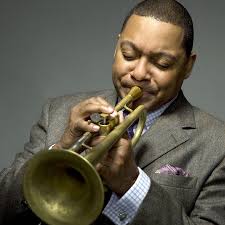
What I would like to better understand in this community is the road to becoming widely known and influential throughout the community. There are hundreds of different top level performers and professors out in the music community and they all have had different roads to get where they are in their career. One example of this would be trumpet player/ music educator Wynton Marsalis, he grew up around the jazz community in New Orleans and was quickly regarded as one of the top performers in the country for his age. This led him to the Julliard school of music where he would later go on to be a prolific performer as well as the head of the jazz department at Julliard.
https://www.juilliard.edu/music/faculty/marsalis-wynton
-
The text described what discourse communities are and how they can give large benefits to the people who are involved within said discourse community. The example that text used was the author joining a local guitar group as a beginner and using the group to flourish and develop into a more skilled musician.
The audience of this text seemed to be teachers and students who are interested in learning about discourse communities and the steps that they can take to join one. By talking about the benefits the audience is much more likely to do further research into the discourse communities around them and take the steps needed to become involved. The text also shows people to take interests in new things, for example the author talked about his journey of learning guitar as an older person and being vulnarable enough to join a group not just of only beginners but people who have had years of experience. By sharing this example the audience could be motivated to try new things and possibly even join a community of like minded people.
Some discourse communities that I am part of would be the music program here at SDSU more specifically the music education route. By having this group of people who are pursuing the same thing as me it feels great to know that I have peers that I can count on as well as a great team of professors and staff that would be willing to help each other whenever possible. Having discourse communities are extremely important when going on to do your career and pursuing something that might not be as common as business. Overall discourse communities are an extremely prominent part of my life and I believe that everyone should have a discourse community in which they can be themselves and share what they are passionate about.
-
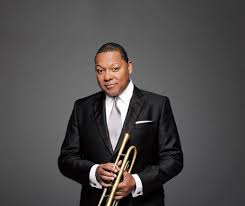
The community that I have chosen that I personally connect with and hope to be a large part of in the future would be the band and music performance community. I am personally involved in this because I have been playing the saxophone for 9 years and have been in the band program for all 9 of those years. Because of this I have chosen to pursue music education as my career, the music education route is incredibly connected to musical performance and the music world as a whole due to the impact that college groups and college professors have on the performance community. For example at most of the top universities the heads of the music department are typically very large names in the music industry, such as the head of the Julliard school of music jazz department is one of the greatest trumpet players and jazz musicians of all time, Wynton Marsalis.
Some of the details in this community that i have became attached too is the analyzation of pieces by scholars and music educators as well as the collaboration between all of the people involved. At most of the major universities in the United States composers would commission different works for the the ensembles at the university. This sort of collaboration is very important to me and I feel that it brings a great benefit to the community as a whole. This connection and collaboration also comes out onto the performance side of the community, for example almost every major artist has collaborated with other artists and worked together to form a connection through music creation. Overall I feel like the collaboration within the music community shows the connection and passion that everyone who does music full time has.

As we continue to blog and explore the community that I have chosen to cover I hope to learn how to be involved in the community as I go into my future career. When continuing the blog I will research some of the different ways to be successful and how to grow to be a big part of the community. To start I have decided to major in music education, this will help start my career and possibly one day I will be collaborating with others and sharing my passion with the world. Overall continuing to blog will help me gain a better understanding of the music community as a whole and possibly be a very influential part of my musical journey as a whole.

-
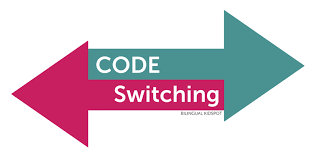
One language practice that I continue to use in the classroom time and time again is the use of code switching and reinforcement within my reading and writing. Code switching can be defined as altering your dialect and word choices depending on the group of people that you are with. For example a high school english teacher would not be talking in the class the same way that they would talk to their friends and family or even other coworkers. The other practice that I use would be reinforcement in both reading and writing, when I am reading I can reinforce the information by going back and reading key points in the text again to solidify them in my mind. When writing I can use reinforcement by bringing up points that I have previously mentioned to remind my audience about my argument as well as solidifying my point and cementing it into the reader. Everyday I use these techniques to enhance my understanding of topics as well as using code switching to come up with appropriate dialogue for whatever point that I am trying to make.
Code switching is something I use in my everyday life, for example there are hundreds of different dialogue options that I could use to get my point across but code switching can give me the ability to asses my audience and think of what would be the most appropriate vocabulary for the given situation. Specifically in the classroom I use code switching to make my writing sound more mature and to make my point more coherent. I do this by looking over my writing and rereading it with the audience in mind. Typically when rereading I will envision the audience as if they were analyzing the vocabulary and looking for key words and phrases to enhance my point and overall argument within the text. Because of code switching I am able to enhance my overall vocabulary and give a more coherent argument for the point that I am trying to make with my text and argument.
The second tactic that I use often In my reading and writing would be reinforcement. The first way that I use reinforcement would be in my reading. The best way to become good at something is through practice and repetition, I believe that this carries over into reading and analyzing different texts and documents. One of the best comparisons to reinforcement through reading is learning a new language or instrument. These are only possible through consistent practice and repetition as well as having a drive to improve and better yourself at these skills. Practicing reinforcement through reading does not explicitly mean reading for a certain amount of time everyday but instead re reading passages and making sure that you are confident in the material. This practice can then be carried over into writing, the way to add reinforcement to writing would be bringing up points that have been made earlier in the argument as well as revisiting topics that have already been explored and adding on them. For example I already talked about code switching but that can tie into reinforcement by ensuring that the vocabulary you are using is both informative and appropriate for the situation. By doing all of these things I use reinforcement to make my point more coherent as well as using it to gain a better understanding on the topics and arguments that I am making within my text.
Code switching and reading/writing reinforcement are both crucial skills that I incorporate into my reading and writing, They both also allow me to formulate and articulate my argument in the most informative and coherent way possible. By using code switching to change up my vocabulary I can take into account that audience that I am speaking to as well as the tone of my argument and use the most appropriate dialogue for the situation that I am in. I can also reiterate my points by using reinforcement. By combining code switching and reinforcement I can make valid points that come with evidence and reasoning as well as using an appropriate tone/ dialogue for the situation that I am in. Overall I believe that combining these two techniques has enhanced my writing as well as my everyday language and dialogue to a point that allows me to make clear and articulate points that can be very informative and appropriate given the situation that I am in.
-
Welcome to WordPress! This is your first post. Edit or delete it to take the first step in your blogging journey.
-
Introduction: Hello, my name is Rhea DeBlanc and I am a first year here at SDSU. I will be majoring in music education here, my main instrument is alto saxophone and I have been playing for around 9 years. I also enjoy things like food and listening to music.
Some of my reading practices include going back re reading text that i just previously read. I believe that this gives me a deeper understanding of the passage and allows me to really internalize the information given in the text. Doing this also can give me an insight as to what the author wanted the audience to think and feel from the passage. Overall going back and re reading texts have given me a deeper understanding on different texts and passages. Here is a document that shows the importance of reading attentively. https://heinonline.org/HOL/Page?handle=hein.journals/yglwyr18&div=36&g_sent=1&casa_token=&collection=journals
To go along with this I like to go back and read things that I have written in their entirety. Doing this gives me a good idea as to what my writing sounds like as well as putting me into the shoes of the reader. Seeing the text from the readers perspective gives me a good idea of what emotions and thoughts that my writing provokes.
The way that I would describe my reading and writing is attentive. I typically try to pay attention to how my writing sounds, as well as paying attention to what the author was going for with the passage he is writing. By practicing these strategies it gives me a more comprehensive idea of the text I am either reading or writing and overall allows me to process the information in a more efficient and observant manner.
One thing that I am really hoping to learn and take away from this course is the ability to make my writing flow better. I feel that a lot of the time when I am writing it seems like I am jumping from one point to the next without really being able to fully connect the points that I am trying to make. Along with that I hope that this class is able to enlarge my vocabulary and give many many different wording options when it comes to making points in writings. Here is a document detailing writing flow and strategies to make the flow more natural. https://writingcenter.unc.edu/tips-and-tools/flow/
Hobbies and interests:
My favorite hobby/activity to do is typically driving around and listening to music, I do this both to relax and to get to know the area around me better. The way that this ties into writing is that it gives me time to think and formulate points in my head that I could later write down and turn into a meaningful text.

One show I really enjoy watching is Family guy, I enjoy this show because its very down to earth and it does not take a lot of attention to understand the plot. The writing for this show also reflects that, for example its very rare to see jokes and topics that you really have to think about to understand. They typically rely on puns or other very straightforward jokes to be entertaining, and because of this I feel that the writers know what they are doing and are intentionally keeping the show lighthearted and shallow.
Some of my favorite things to talk about with either my friends or family would be current events such as what’s going on in the news or even local news about my hometown or the surrounding areas. By talking about these things we can stay informed and knowledgeable about important topics. A lot of the local news that I consume could be found in my hometowns news paper http://www.heraldpublications.com/herald/el-segundo-herald/
Overall all of these hobbies and interests are able to keep me informed and engaged with current events and they keep me informed.

 Site Title